This past weekend I headed up to New Jersey for the sixth annual CraigCon.
Back in college, I made a few great, lasting friendships playing D&D on a regular basis in the old "Conshohocken House". I lived in this house with 4 other people, 2 of which were gamers like myself. We started a game that I ran for close to a year.
One thing you have to understand was we played this game in the basement of that crowded house. The basement was such a mess by the end of that game that I was literally using a pile of old pizza boxes as a table to keep my books and dice. In retrospect it's amazing we didn't contract bubonic plague.
Even though I've played many games since, all a lot of fun, there was something about that particular campaign in the "Conshy House" that made it special. It was the perfect storm for a lot of us: we were at a transitional point between college and trying to figure out what the hell we were going to do with the rest of our lives (for my part I was in between college attendance at all). There were a lot of other things people were working through, things that put us squarely, forcibly in the realm of "adulthood". It was quickly becoming clear as these realities mounted that "things", whatever they were, were changing, and once they did, there would be no going back.
The characters in the Conshy game were an outlet as we coped with that. I'm sure if we had recorded those games and had a psychologist take a look at them now it would be an absolute treasure trove of analytic goodness.
Eventually the game ended, and time marched on. We all gradually moved away to various parts of the country. Whenever we talked we all agreed we missed gaming together. But more importantly we missed our friends.
Thus CraigCon was born (named for my pal Craig, who essentially hosted the first one at his hosue).
Now, many CraigCons later, the thing is a full fledged event. This year it was hosted by an honest to goodness gaming store (thanks go out to Reality's Edge), complete with a CraigCon discount on D&D goods. There were tons of new faces, and although turnout from the old Philly crew was minimal this year (only 3 of us counting myself), turnout was very good in terms of sheer numbers. It's pretty amazing to think this thing started as an excuse for old friends to hang out.
Altogether it was an absolute blast. It was great to see some younger faces in the crowd as well. Even though a lot of kids were in the store just to play the Magic card game, it's still cool to see people gaming and talking to each other face to face, especially with MMOs and their like gaining increasing popularity. I can't help but feel like something gets lost when these types of games get moved to a computer.
At its best CraigCon provides a chance to introduce people to different playing styles. At its worst it gives you a stomachache when you are walking into IHOP for your sixth straight meal.
The highlight for me was getting a chance to introduce Burning Empires to a new audience. The gents I ran the demo scenario for really took to it quickly, complete with a tremendous monologue by one of the players that had to be one of the best pieces of RP I've seen in that kind of environment for awhile.
Here's to six more years of gaming (and no IHOP for a year).
Showing posts with label tabletop. Show all posts
Showing posts with label tabletop. Show all posts
Monday, July 23, 2007


Friday, April 13, 2007
A Good Cause
I don't usually plug like this, but the excellent blog Treasure Tables put up a post about something called Ziggurat Con. It's a gaming convention being organized by some troops in Iraq.
They are looking for donations of RPG books, since it isn't exactly easy to go down to the local gaming store when you're in the middle of a war zone.
It's a cause that isn't going to save the world, but sending a couple books to some of the troops so that they can relax and game for a few days seems a worthy cause to me.
Tuesday, April 10, 2007
Luke Crane: Author of Burning Empires
Luke Crane graciously offered to answer a few questions for the blog. The interview was conducted over chat, and I've cleaned things up a bit for continuity/clarity.
------
SK: First things first... how did you get into roleplaying? Because I can't imagine D&D prepared you to write something like this.
Luke: I have a funny story for this! I am prepared!
I was at ICON a couple of weeks ago, and I bumped into a rather damp and disgruntled Greg Costikyan on the LIRR platform on the way home.
It was raining, and he was huddling under the pedestrian bridge to get out of the rain. I introduced myself -- we'd met before, but I never assume anything.
We chatted for a while on the train. Finally, I had a fanboy moment.
"Greg, I gotta tell you: Paranoia was my first game. So you're sorta my game design hero. The essay on dramatic play changed my life."
He smiled and nodded, "We were trying to get away from the crazy rules of Dungeons and Dragons."
"I have a terrible secret to admit," I said.
"Oh?"
"We played Paranoia straight! As dark science fiction! No comedy!"
He gawked and laughed.
So there, that's my first RPG experience. My friend Aom Isabell introduced me to gaming in the 6th grade.
Then came Marvel Superheroes 1st Edition. Then D&D. In pretty short order.
My first MSH character was called Blue Streak, I think. My first D&D character was a dwarf with chainmail and an axe. I walked into a room and killed a goblin.
My life was forever changed.
SK: I think we all have a similar story of the dwarf with the axe.
Luke: My life was changed only because I'd never played a fantasy RPG up to that point. ;)
SK: What was the first game you GMed?
Luke: First game I GMed? The first thing I did once I played those games was go home and design my own. I used the Avalon Hill game Wizard's Tower (I think that's what it was called), and made my own fantasy RPG.
I ran my friend Joe Howard through it. He was a big fighter dude with a spiked helmet. He killed some gremlins and stuck them on his spike. I must have been 11 or 12. He even drew a picture of it at the time.
Man, what I wouldn't do for that pic!
Anyway, I like intense games. I like to play rough. Some of my friends are very aggressive as well. We tend to get worked up. I've gotten into my fair share of screaming matches over the years.
SK: Burning Empires definitely looks intense. Do you consider things like the scene economy (which I figure would lead to some of that intensity) as a natural progression from Burning Wheel?
Luke: No. Completely unnatural. An experiment really.
I realized that Burning Wheel doesn't instruct you on how to tell a story or how to construct a narrative or the conventions of the genre. It dumps a pile of interesting bits in your lap and says, "Build a car, go fast."
People who know how to build cars get excited and end up going really fast. People who don't, get frustrated and don't go fast.
SK: That's interesting, because I have a copy of Burning Wheel and was really excited by a lot of the things I saw there... but for some reason it was things like the Infection mechanics and scene economy that really thrilled me about Burning Empires. There is a lot in Burning Empires that seems to take Burning Wheel further. But you consider them separate entities?
Luke: Completely separate. We do not play with any bleed over from Burning Wheel to Burning Empires or vice versa.
There are things I like in Burning Empires better than Burning Wheel, and things in Burning Wheel that I like better than Burning Empires.
SK: Now you must give an example!
Luke: I like Perception better in Burning Empires -- I fucking hate open-ending now. And I like Linked Tests in Burning Wheel better -- I think I fucked them up and broke them in Burning Empires.
And what's more, I KNEW I was going to break them when I changed them. But I did it anyway.
SK: So would you change it now, or do you think it all still works?
Luke: Change which?
SK: Let's say Linked Tests in Burning Emipres.
Luke: Well, of course I'd change them in hindsight. But they are what they are. It's a minor thing.
SK: In your Treasure Tables interview, you talked a bit about some of the differences between running a convention game and a home game. You said you wanted people to play your demos and be confident bringing home a different attitude to their home game (I'm paraphrasing).
Luke: Sort of, yeah.
SK: Do you think there is a particular level of intensity/excitement required to drive a game like Burning Empires as a GM? Or is it something you hope comes out through the mechanics?
Luke: I like all my games to be intense and have a certain edge to them. But that's just my style.
I design my games to put difficult choices in front of the players. Otherwise, you can play them in your own style.
SK: I've noticed on the message boards that the Infection mechanics in particular seem to rankle some players when they first encounter them.
Luke: Hate isn't too strong a word. But the Infection mechanics aren't really the problem.
SK: Is it a misunderstanding of their purpose?
Luke: It's all about expectations. My games are ridiculous in that they ask you to jettison your play style and think in a new mode. It's a lot to ask people who just want to play a game.
Some folks are up to the task. Some folks aren't and know that from the beginning. But some folks get involved thinking that they are going to change the way the game is played to their style.
Carnage ensues.
SK: You'll have to forgive me, I've only just discovered Forge theory, but the mechanics seem to lean towards the "Narrativist" approach.
Luke: "Narrativism" just means making in-game choices that are about story/character/theme, rather than about a particular game mechanic or the overall situation transpiring within the game world.
The Infection mechanics can serve all three priorities. They are designed to create a story arc and give all of the players at the table input into that overarching story arc.
SK: Is Burning Wheel/Burning Empires something that came from Forge theory, or was the development of the games more organic than that? Were there other games that really influenced your design, or did it come from your own play experience?
Luke: Burning Wheel Classic was an untainted product of Game Headquarters, developed in isolation. You can check out the bibliography in the back of Burning Wheel Revised, it tells the whole story.
Anyway, after playing Burning Wheel Classic hardcore for 1.5 years with hundreds of different players -- some of them being top flight game designers themselves -- I wanted to clean the bitch up. So I revised it and re-released it.
But if you compare the two editions, you'll see that the additional materials are both pretty traditional and pretty unique to BWHQ.
What I found as I played all these excellent games was that we were estranged sisters and brothers. We were all designing from a similar standpoint, striving for similar goals using different tools and materials.
I think the only thing I wholly lifted from another game was the Linked Test from the Victory mechanics in Sorcerer. Other than that, the other games just largely helped me clarify my own thoughts on various design elements.
SK: Here's kind of a wacky question that some of us have been debating -- do you think that the popularity of games like World of Warcraft and other massive online games could actually help interest people in tabletop games? Or do you think the activities are too dissimilar? I ask because of the social element involved in something like World of Warcraft.
Luke: I think the sun has set on tabletop RPGs as a mainstream hobby.
SK: Really?
Luke: Yup. Barring some ridiculous innovation that hooks adult players, I'd say it's relegated to the hobby market for eternity.
SK: That makes me sad.
Luke: Doesn't make me sad at all.
SK: Why is that? You like the fringe?
Luke: I do! It's fun being part of the cool, weird kids!
I'm not saying that RPGs are going to go away. But the Serenity RPG, for example, won't be a mass market hit.
SK: Do you think a game like Burning Empires can bring an experience that simply cannot be captured in an online game?
Luke: Of course! There's NOTHING out there that has the depth and richness of a tabletop.
SK: I know many have tried and failed.
Luke: And will continue to fail until one of the current crop of game designers makes it into the electronic side.
The electronic side is now a victim of its own success. It's got to follow a formula to be successful. And that formula has little to do with the awesome that you and I experience on a regular basis.
SK: Whereas, on the fringe, you have the freedom to try new things?
Luke: Sure, but when you count free/chat players and WoW/MMO players, we table toppers are a small, weird minority.
SK: It was thought in the giddy days of D&D 3.0 by some that we would see a resurgence of tabletop gaming. Do you think Wizards of the Coast was a good thing for the hobby?
Luke: Are you kidding? Peter Adkison's vision for D&D was a great thing!
Even if WotC's intent was malign, they still reinvigorated the hobby. And I don't believe they had a malign intent!
SK: I've heard it said that open d20 diluted quality.
Luke: Blah blah blah. RPGs are more popular now than ever!
SK: Would you rather play Burning Empires with someone who is gaming for the first time, without any preconceived notions of how it works? Or would it be more satisfying to you personally to see an old gamer come to the table, bitch and moan, but eventually get it? And which do you think would lead to the better game?
Luke: They both lead to the same type of game, actually. But the new players often get the mechanics and concepts much faster than the old players.
New players don't often have the irrational mechanics-hate that old players demonstrate. New players can more often walk away from a game and say, "That was weird and complicated and it wasn't for me."
Diehard RPGers often get angry at me personally and start bitching about how the game is broken.
My favorite player is a skilled one with an open mind. I play Burning Empires and Burning Wheel with a lot of n00bs. It's fun, but the system is designed to be mastered and gamed. I love it when someone can give me a run for my money!
SK: Why do you think it is that the diehards have such violent reactions to the game? People either love it or hate it!
Luke: Expectations. There seems to be little middle ground with my games.
SK: You like it that way, don't you?
Luke: I do. Good or bad, and I can't say which, but at least my games are different than what else is out there. They challenge you in ways that many other games do not.
SK: Any parting words of wisdom for other game designers out there?
Luke: Never give up, play test, be honest, hire an editor, and never trash talk another game or game designer.
------
Luke will be attending Origins, Dexcon, and Gencon this summer.
Check out Burning Wheel here.
Check out Burning Empires here.
------
SK: First things first... how did you get into roleplaying? Because I can't imagine D&D prepared you to write something like this.
Luke: I have a funny story for this! I am prepared!
I was at ICON a couple of weeks ago, and I bumped into a rather damp and disgruntled Greg Costikyan on the LIRR platform on the way home.
It was raining, and he was huddling under the pedestrian bridge to get out of the rain. I introduced myself -- we'd met before, but I never assume anything.
We chatted for a while on the train. Finally, I had a fanboy moment.
"Greg, I gotta tell you: Paranoia was my first game. So you're sorta my game design hero. The essay on dramatic play changed my life."
He smiled and nodded, "We were trying to get away from the crazy rules of Dungeons and Dragons."
"I have a terrible secret to admit," I said.
"Oh?"
"We played Paranoia straight! As dark science fiction! No comedy!"
He gawked and laughed.
So there, that's my first RPG experience. My friend Aom Isabell introduced me to gaming in the 6th grade.
Then came Marvel Superheroes 1st Edition. Then D&D. In pretty short order.
My first MSH character was called Blue Streak, I think. My first D&D character was a dwarf with chainmail and an axe. I walked into a room and killed a goblin.
My life was forever changed.
SK: I think we all have a similar story of the dwarf with the axe.
Luke: My life was changed only because I'd never played a fantasy RPG up to that point. ;)
SK: What was the first game you GMed?
Luke: First game I GMed? The first thing I did once I played those games was go home and design my own. I used the Avalon Hill game Wizard's Tower (I think that's what it was called), and made my own fantasy RPG.
I ran my friend Joe Howard through it. He was a big fighter dude with a spiked helmet. He killed some gremlins and stuck them on his spike. I must have been 11 or 12. He even drew a picture of it at the time.
Man, what I wouldn't do for that pic!
Anyway, I like intense games. I like to play rough. Some of my friends are very aggressive as well. We tend to get worked up. I've gotten into my fair share of screaming matches over the years.
SK: Burning Empires definitely looks intense. Do you consider things like the scene economy (which I figure would lead to some of that intensity) as a natural progression from Burning Wheel?
Luke: No. Completely unnatural. An experiment really.
I realized that Burning Wheel doesn't instruct you on how to tell a story or how to construct a narrative or the conventions of the genre. It dumps a pile of interesting bits in your lap and says, "Build a car, go fast."
People who know how to build cars get excited and end up going really fast. People who don't, get frustrated and don't go fast.
SK: That's interesting, because I have a copy of Burning Wheel and was really excited by a lot of the things I saw there... but for some reason it was things like the Infection mechanics and scene economy that really thrilled me about Burning Empires. There is a lot in Burning Empires that seems to take Burning Wheel further. But you consider them separate entities?
Luke: Completely separate. We do not play with any bleed over from Burning Wheel to Burning Empires or vice versa.
There are things I like in Burning Empires better than Burning Wheel, and things in Burning Wheel that I like better than Burning Empires.
SK: Now you must give an example!
Luke: I like Perception better in Burning Empires -- I fucking hate open-ending now. And I like Linked Tests in Burning Wheel better -- I think I fucked them up and broke them in Burning Empires.
And what's more, I KNEW I was going to break them when I changed them. But I did it anyway.
SK: So would you change it now, or do you think it all still works?
Luke: Change which?
SK: Let's say Linked Tests in Burning Emipres.
Luke: Well, of course I'd change them in hindsight. But they are what they are. It's a minor thing.
SK: In your Treasure Tables interview, you talked a bit about some of the differences between running a convention game and a home game. You said you wanted people to play your demos and be confident bringing home a different attitude to their home game (I'm paraphrasing).
Luke: Sort of, yeah.
SK: Do you think there is a particular level of intensity/excitement required to drive a game like Burning Empires as a GM? Or is it something you hope comes out through the mechanics?
Luke: I like all my games to be intense and have a certain edge to them. But that's just my style.
I design my games to put difficult choices in front of the players. Otherwise, you can play them in your own style.
SK: I've noticed on the message boards that the Infection mechanics in particular seem to rankle some players when they first encounter them.
Luke: Hate isn't too strong a word. But the Infection mechanics aren't really the problem.
SK: Is it a misunderstanding of their purpose?
Luke: It's all about expectations. My games are ridiculous in that they ask you to jettison your play style and think in a new mode. It's a lot to ask people who just want to play a game.
Some folks are up to the task. Some folks aren't and know that from the beginning. But some folks get involved thinking that they are going to change the way the game is played to their style.
Carnage ensues.
SK: You'll have to forgive me, I've only just discovered Forge theory, but the mechanics seem to lean towards the "Narrativist" approach.
Luke: "Narrativism" just means making in-game choices that are about story/character/theme, rather than about a particular game mechanic or the overall situation transpiring within the game world.
The Infection mechanics can serve all three priorities. They are designed to create a story arc and give all of the players at the table input into that overarching story arc.
SK: Is Burning Wheel/Burning Empires something that came from Forge theory, or was the development of the games more organic than that? Were there other games that really influenced your design, or did it come from your own play experience?
Luke: Burning Wheel Classic was an untainted product of Game Headquarters, developed in isolation. You can check out the bibliography in the back of Burning Wheel Revised, it tells the whole story.
Anyway, after playing Burning Wheel Classic hardcore for 1.5 years with hundreds of different players -- some of them being top flight game designers themselves -- I wanted to clean the bitch up. So I revised it and re-released it.
But if you compare the two editions, you'll see that the additional materials are both pretty traditional and pretty unique to BWHQ.
What I found as I played all these excellent games was that we were estranged sisters and brothers. We were all designing from a similar standpoint, striving for similar goals using different tools and materials.
I think the only thing I wholly lifted from another game was the Linked Test from the Victory mechanics in Sorcerer. Other than that, the other games just largely helped me clarify my own thoughts on various design elements.
SK: Here's kind of a wacky question that some of us have been debating -- do you think that the popularity of games like World of Warcraft and other massive online games could actually help interest people in tabletop games? Or do you think the activities are too dissimilar? I ask because of the social element involved in something like World of Warcraft.
Luke: I think the sun has set on tabletop RPGs as a mainstream hobby.
SK: Really?
Luke: Yup. Barring some ridiculous innovation that hooks adult players, I'd say it's relegated to the hobby market for eternity.
SK: That makes me sad.
Luke: Doesn't make me sad at all.
SK: Why is that? You like the fringe?
Luke: I do! It's fun being part of the cool, weird kids!
I'm not saying that RPGs are going to go away. But the Serenity RPG, for example, won't be a mass market hit.
SK: Do you think a game like Burning Empires can bring an experience that simply cannot be captured in an online game?
Luke: Of course! There's NOTHING out there that has the depth and richness of a tabletop.
SK: I know many have tried and failed.
Luke: And will continue to fail until one of the current crop of game designers makes it into the electronic side.
The electronic side is now a victim of its own success. It's got to follow a formula to be successful. And that formula has little to do with the awesome that you and I experience on a regular basis.
SK: Whereas, on the fringe, you have the freedom to try new things?
Luke: Sure, but when you count free/chat players and WoW/MMO players, we table toppers are a small, weird minority.
SK: It was thought in the giddy days of D&D 3.0 by some that we would see a resurgence of tabletop gaming. Do you think Wizards of the Coast was a good thing for the hobby?
Luke: Are you kidding? Peter Adkison's vision for D&D was a great thing!
Even if WotC's intent was malign, they still reinvigorated the hobby. And I don't believe they had a malign intent!
SK: I've heard it said that open d20 diluted quality.
Luke: Blah blah blah. RPGs are more popular now than ever!
SK: Would you rather play Burning Empires with someone who is gaming for the first time, without any preconceived notions of how it works? Or would it be more satisfying to you personally to see an old gamer come to the table, bitch and moan, but eventually get it? And which do you think would lead to the better game?
Luke: They both lead to the same type of game, actually. But the new players often get the mechanics and concepts much faster than the old players.
New players don't often have the irrational mechanics-hate that old players demonstrate. New players can more often walk away from a game and say, "That was weird and complicated and it wasn't for me."
Diehard RPGers often get angry at me personally and start bitching about how the game is broken.
My favorite player is a skilled one with an open mind. I play Burning Empires and Burning Wheel with a lot of n00bs. It's fun, but the system is designed to be mastered and gamed. I love it when someone can give me a run for my money!
SK: Why do you think it is that the diehards have such violent reactions to the game? People either love it or hate it!
Luke: Expectations. There seems to be little middle ground with my games.
SK: You like it that way, don't you?
Luke: I do. Good or bad, and I can't say which, but at least my games are different than what else is out there. They challenge you in ways that many other games do not.
SK: Any parting words of wisdom for other game designers out there?
Luke: Never give up, play test, be honest, hire an editor, and never trash talk another game or game designer.
------
Luke will be attending Origins, Dexcon, and Gencon this summer.
Check out Burning Wheel here.
Check out Burning Empires here.
Monday, March 19, 2007
A Look at Burning Empires
In my last full length post regarding game innovation, I hinted a little bit at the idea of tabletop RPG rules really only existing to mediate combat.
That was only the tip of a very large and formidable iceberg of RPG design theory.
D&D - The Standard
I would venture to guess that when the overwhelming majority of people think of tabletop RPGs, they think of Dungeons and Dragons. This is for good reason, since it is clearly the most widely played based on sales and licensing.
The D&D rulebooks (currently in "version 3.5") encompass a wide variety of rules related to character creation, combat, rewards for combat ("experience points" or "XP"), and character advancement (using that XP).
Now under the covers of those four things, there is a LOT going on, but if you understand it in those terms you'll have a pretty good idea what the aim of the rules in D&D are meant to mediate.
Given the basic rules of D&D, you can engage in entertaining combat using a very well thought out and detailed system that covers everything from swinging a sword, to hurling a fireball, to turning into a dragon if your character is powerful enough. It's why it is so easy and natural to make computer games based on D&D type mechanics: it provides a nice combat engine around which you can wrap a story.
Now, Dungeons and Dragons is historically built on the precepts of a Tolkien type universe. This is a world of elves, dwarves, orcs, and other fantastic creatures. As such the character you play is typically going to be from a fantasy type setting. Many players enjoy "acting out" these roles to add an extra element to the game, and this is where the real fun of playing these types of games comes for me. This type of "in character" speaking/acting lends itself to interesting storytelling and makes the stakes of combat and other mechanics seem that much more important, as we become emotionally attached to the characters.
This is a matter of setting, however, not system. The elves and dwarves and whatnot can easily be replaced with Vulcan and Borg. The important thing is the idea that players can become attached to their characters through storytelling. Which brings me to my next point.
There is nothing inherent in D&D (and most other systems of this type) that actually lends itself to storytelling.
Think about that for a second. One of the major reasons many people play D&D and tabletop RPGs is to involve themselves in a story, and yet most of these games have no rules or mechanics that encourage/mediate this sort of play.
Now, it's obvious rules to do that are not necessary. The folks I've played these types of games with over many years have all been excellent storytellers, and I like to think we've spun some good yarns. But it does give one pause: did we do all that in spite of the rules, just throwing out/trimming down complexities that got in the way of our storytelling?
The Forge - System Does Matter
I have heard a certain notion about role-playing games repeated for almost 20 years. Here it is: "It doesn't really matter what system is used. A game is only as good as the people who play it, and any system can work given the right GM and players." My point? I flatly, entirely disagree.
- Ron Edwards, System Does Matter
On the Adept Press forum known as "The Forge", Ron Edwards posted this shot across the bow of traditional thinking about RPG systems.
In that same article (and later ones), Edwards expanded upon ideas put forth in the Threefold Model of RPGs, which divides players (and therefore games) into 3 broad buckets:
1) Gamist - Players who like having a chance to win. They need mechanics interested in resolving contests. Things like D&D and Shadowrun are good for these types of players.
2) Narrativist - Players who like participating in a good story. They need mechanics that will help drive a story forward. Sorceror and Dogs in the Vineyard are good examples of this.
3) Simulationist - Players who want a system as realistic as possible. Edwards suggests that GURPS and Pendragon fall under this category.
Most of you are probably looking at that breakdown and thinking one of two things:
1) No category can define me, man!
2) Yeager, you are a huge nerd.
I agree with you on both points. Obviously these categories aren't going to define any one style of player precisely. I myself prefer a game focused on story, but sometimes you just want to lead an army onto the battlefield and split the skulls of a battalion of imaginary orcs in twain.
BUT, based on these categories and what I just said I like in my games, it should be apparent that I'm not playing the right type of game to really nourish the preferred style of play. Keep in mind here that I'm not criticizing D&D or Shadowrun or any of those games with this statement: I've been playing them for years. Clearly I really enjoy them. But it still makes one curious about the possibilities of a system that makes efforts to get mechanics that go beyond simply: "Roll to see if you hit it with your sword."
You're Having Fun, So What's Really the Problem?
When you are playing a "Gamist" style game, but what you're interested in playing is the "Narrativist" style, you run into some pitfalls.
Any "Gamist" style game is capable of supporting RP. If the players are into their characters and the setting (again, not to be confused with system), good RP is going to result.
However, it can be difficult to make sure that everyone gets time in the spotlight. There are no mechanics in place to stop that guy who wants all the attention to be on him. If he has a forceful personality, outside of telling him "Shut up", nothing in the rules can really stop you.
If you have a twink player who loves to exploit the rules for every possible edge, his character is going to become unbalanced with the rest of the party. The problem here is as a GM you try to create challenges and situations that involve everybody, but again nothing can stop that guy from owning every dragon you throw at him while everyone else stands around and watches.
In other words, a disproportionate amount of the onus falls on the GM to drive story forward. Not only is the GM responsible for putting together the scenarios, if you want a good story with everyone involved and invested you really need to go out of your way to make sure that happens. You need to intuit what it is the players want from you based on how they react to certain things and try to give it to them.
This goes back to Edward's hypothetical "Herbie the GM". If Herbie is a good GM, he'll make it all work regardless. But it sure would be nice if the system helped make it work.
Um... You Were Going to Talk About Burning Empires, Right?
First, let's talk about something in Burning Empires that is sure to get every player emotionally invested in the game right from day one.
World Burning.
Before you get too excited, I probably should have mentioned that "burning" is interchangeable with "creation" in the lexicon of this game. So when you see things like "world burning", "technology burning", "character burning", etc., you are not actually lighting things on fire. I understand your disappointment, but trust me, it's still cool.
The first session of your game will consist of World Burning and Character Burning, in that order. World Burning is a collaborative effort in which you choose the type of planet your game will take place on in terms of climate, available technology levels, quarantine rules, and a host of other things. This isn't just an exercise in creativity: the choices made will determine starting disposition pools for the good guys (the humans) and the bad guys (Vaylen, parasitic worms that take over your brain and steal your body). Disposition is part of the macro story economic of the game: by using maneuvers (segments of play time), you are trying to reduce your opposition's disposition to zero. We'll touch more on maneuvers in a bit, but for now it is enough to know that the choices you make about your world have a tangible effect on your game through mechanics right away.
Next you make characters. Burning Empires uses a "lifepath" system which is very different from anything I've seen before. The more starting "lifepaths" a character has, the more powerful she is. Each lifepath that you take opens up traits that you can take to enhance your character, in addition to opening up more lifepaths with more traits. It's like a spiderweb, but the genius of the process is the lifepaths will give you a really great character history right away as part of the mechanics of character creation. You'll have to fill in the blanks of how she went from one lifepath to the next, but it still provides a pretty detailed baseline.
Also as part of character creation is the crux upon which this game appears to revolve: character beliefs. You must come up with 3 beliefs that define your character, and I'm not just talking about "I hate the worms." A good belief explains what you're going to do about your hatred of the worms: "I hate the worms, and I will persuade my brother to fight by my side against them." Now we're talking.
These beliefs are important because they drive the artha system, which is like the "experience" system in Burning Empires. Every time you perform in a session in a way that jives with your beliefs, you earn artha. What this means is that players have a mechanical reason to develop their beliefs and perform actions towards fulfilling them.
Scene Economy
There's lots to talk about in this game (without even getting into the conflict systems), but I want to touch on the concept of scene economy as a final example of how this game is different from traditional RPGs I'm used to playing.
As I stated before, one of the problems in story driven RPGs that are using gamist systems is the issue of "spotlight". It can be difficult to make sure everybody is getting a chance to shine when playing Shadowrun or D&D, and players with strong personalities are more likely to steal spotlight time for their characters from folks who may not be as assertive. As a GM I've always considered it part of my responsibility to make sure it doesn't happen, but with Burning Empires there are actual mechanics to help prevent it.
Game sessions in Burning Empires can consist of one or two maneuvers. This is a unit of measurement for a chunk of playtime. In each maneuver, the player and GM choose a maneuver type they hope to accomplish from the list of options. (There is a very clever mechanic here as well, since some maneuver types provide bonuses/advantages against others, but it is a bit much to get into here). The players (and GM!) then have a certain number of "scenes" allotted to them to accomplish their maneuver purpose. The scenes are defined as follows:
- Conflict: This type of scene is anything that requires BE's combat rules, which include "Duel of Wits" for verbal arguments/debates (important ones with something at stake, like the Council of Elrond and what to do about the One Ring, for example, or persuading your brother that his wife has in fact been taken over by a Vaylen worm) and "Firefight!" for shooting guns (duh).
- Building: A scene where you do something specific towards your goal which requires a roll of some kind. This encompasses a huge variety of options: you could do research on that mysterious NPC, you could hack into the bad guy's computers, lay groundwork for a future conflict, etc.
- Color: A scene where you are fleshing out your character or the game world with details, usually through RP.
- Interstitial: A scene where you exclusively interact with another player or character.
At first I thought this was sort of arbitrary also, but the more I thought about how typical games run, this is how things happen anyway. By limiting how many of these the players and GM get, it provides some serious focus/pace to the gameplay, because you have a limited amount of time to do what you need to accomplish your maneuver.
Think about that for a second. This means that the splotlight hog really has to think about how important it is that he gets that twentieth tattoo or the eighth engraving on his sword or whatever. It doesn't limit the possibilities, it just forces priorities. Combine that with a belief system where players need to move towards their beliefs to earn artha, and you've got yourself a pretty tightly wound mechanic to drive play.
Enough Already!
Obviously there's more to this, but I've gone on long enough I think to highlight the things I found exceptionally cool about Burning Empires. I hope I also provided some context as to why this game is so interesting to me.
Now, on the downside: this game definitely would take some adjusting. I can imagine it might be tricky for the first couple of weeks for an entire group to wrap their heads around some of this stuff without resistance. It also doesn't look like it would be easy to do right away with large groups: I can't imagine trying to run this game with more than three players on a first campaign.
Most importantly, in the old style games I've described to you like D&D and Shadowrun, for the most part the players are reactive. They react to situations the GM presents to them. In a game like this, the players must be active. They must use their scenes to advance their beliefs and earn artha.
However, it does via mechanics address a number of the things that I take for granted as just "things you deal with" when running a game. And if nothing else, it's really made me think about the genre of the tabletop RPG and how it can distinguish itself in very real ways from MMOs, because games like this one really highlight things that would be exceptionally difficult to duplicate using a computer.
Friday, March 09, 2007
This May Require Burning Edge
I hate to link and run, but with the chatting I've been doing about Shadowrun lately, you might get a kick out of this story spotted on the Burning Empires forums.
Elf defence for 'lingerie thief'
Elf defence for 'lingerie thief'
Tuesday, March 06, 2007
Innovation, or Change for the Sake of Change?
It's not much of a secret that I enjoy trying out new game concepts. In a lot of cases, the ideas surrounding a new game concept are a lot more interesting to me than the actual execution, which sometimes ends up leaving me disappointed.
A couple examples of this to illustrate.
I remember several years ago seeing the original Neverwinter Nights at GenCon. There was an hour long demonstration of the DM tools in action. During that hour the fellow put together a small dungeon, populated it with monsters, put together some scripts/dialog trees for a couple of them, and even populated the place with some traps and treasure. When the adventurers arrived, the demonstrator was even able to add things and tweak encounters on the fly.
I was completely blown away by this. At last, no longer would distance be a factor keeping the gaming group together. I would convert old campaigns to Neverwinter Nights games, and it would be awesome. We'd finally be able to see on a computer screen, with a modicum of effort, all those things we had envisioned over our years of weekly gaming.
Needless to say, this was sheer foolishness. The tools, while not too difficult, were certainly not as easy to use as they appeared in the perfectly rehearsed demo. The game at the time didn't run that well over a network. Trying to tweak stuff on the fly was extremely tough. Altogether the entire experience was disappointing. Even the single player game wasn't as good as the predecessor, Baldur's Gate 2.
Another example would be a tabletop RPG called Engel. I got this game while the d20 bubble was not quite ready to burst. (For you uninitiated, "d20" is an open rules system designed by Wizards of the Coast, the owners and creators of D&D in its current form.)
The idea is pretty cool. It's a post-apocalyptic world where angels do battle with demons in a sort of sci-fi setting. The problem is that the rules completely suck. Even though this thing is based on an already existing system, they still manage to feel incomplete. I remember reading the flavor stuff for Engel and being psyched to run a game, then realized I didn't know how I'd actually do it because things like character creation aren't even spelled out properly.
Pretty lame.
In both of these cases though, I went out and spent the money because the idea just seemed so cool. I own a Nintendo DS because the games are completely unique. I have a Wii on order (arriving in another couple weeks) because I'm interested in the possibilities of a system based on such a unique control scheme. I have a Windows XP partition on the Mac for the sole purpose right now of playing Dwarf Fortress simply because the gameplay is so strange and wonderful. Even at my job, I sometimes have to take a step back and ask myself if I'm designing something using a certain paradigm or technology just because I think it's cool and want to try it.
Did curiosity get the better of me last week when I reinstalled Warcraft? Did the hype of change and "new stuff" bring me back? Or was it just booze, stupidity, and a weak will?
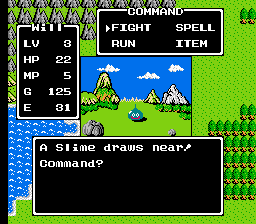
Probably the latter. It took under an hour of playing Burning Crusade, the shiny new Warcraft expansion, to remember why I quit that damn game. In a social game like that one, if you can't keep up with the people you want to play with, you're going to be very, very lonely. Logging into WoW and making a new character, I entered a ghost town... in my (albeit very short) time playing the day after the reinstall incident, I encountered one other person. I assume everyone has made the rush to Outland, but it does rather defeat the purpose of an MMO if there is nobody else to play with, doesn't it? Given the mechanics of WoW's solo gameplay, I might as well be looking at this:

On the tabletop front, my Shadowrun game continues to be a lot of fun. There is no substitute for sitting down with friends and slinging dice face to face. But even though the rules for Shadowrun are different than the D&D d20 system, they still foster the same type of gameplay, and that gameplay is based on combat.
The overwhelming majority of the rules in these games are built to support combat resolution. RP and storytelling are things that happen if you have the type of group that is interested in them, but the rules certainly do not encourage this sort of play.
Enter something like Burning Empires, and other games of its philosophy. The rules are built around character development. The rules are built around resolving storytelling conflicts. Naturally I've been devouring this rulebook (which is a hardcover beast of a book that could dent a person's skull if hurled at them from under 30 yards).
It's a completely different idea that requires a completely different type of play, however, and that's why I wonder if I'll ever actually play it. Some of the concepts are extremely difficult to wrap your head around when you've been playing the "I rolled a 17 to hit the orc" style for over a decade.
In the next post I'll get a little more into how Burning Empires works as opposed to the traditional tabletop RPG, so if you're not into that sort of thing I won't be offended if you skip over it.
NOTE: Quick shout out to defective yeti who has a terrific post about replacing old cliches with new ones via reader submissions. If you follow the link, look for "get on the nut foot", which is my small contribution.
Monday, February 05, 2007
Gaming's Many Forms, or the Burning Shark
Last Thursday's Shadowrun game was a ton of fun. It was odd not having one of the group's stalwart players there, but we soldiered on.
I imagine most gaming groups have their ups and downs. But after reading this post from Abulia Savant, I can certainly count myself lucky. Our group has never had problems of this magnitude.
Perspective is a funny thing like that. Sometimes one forgets that things are never so bad that they can't get worse.
On a somewhat related note, the momentum for the Warcraft expansion pack has been picking up everywhere I look. Some of the folks who work on my floor are avid WoW players and I hear them chatting about it once in awhile. Most of the Thursday night gaming crew also plays the game (including, I suspect at this point, the infamous Andy), going so far as last week to bring a hardbound copy of the artwork to the table to ogle in pre-dice slinging reverence.
A little perspective helps here, too. For starters, the last thing I need right now with Final Fantasy XII remaining yet unfinished is another game, particularly with the siren song of Dwarf Fortress calling to me from the ugly, demon spawned XP partition of my iMac. It also helps that one of the new races in the game was apparently re-imagined as a famous Star Trek character, complete with spaceship. The shark, people, has officially been jumped.
The required time commitment remains a big factor. Although everyone insists that the smaller instance sizes have eliminated the time consuming need to carefully organize for six hour dungeon treks, I remain extremely skeptical that it will stay that way once everyone maxes out again at the new level cap. At that point it would only make sense for Blizzard to make larger raid instances again in an effort to stem off the inevitable tide of player boredom and angst.
Another factor is the core gameplay mechanic itself. If not for the social aspect, the game would, frankly, be a dull graphics update to Dragon Warrior. Even Final Fantasy XII, now that the new car smell of the gambit system has worn off, is exhibiting some of these same traits.
I must admit that the thing I find most comical (and satisfying in a snarky way) is that everyone who spent the last several months of their lives raiding for hours every night found their gear obsolete seconds after installing the expansion pack. The fact that regular, solo quests now yield gear greater than anything which you acquired with the aid of 39 other stalwart companions just a month ago is a design move that has either slipped the notice of the players, or been offset by gear so unbelievably l33t that it has blinded the good sense for which hardcore WoW players are universally renown.
It was the social aspect of WoW that I thought I wanted. Before the first Christmas of WoW's lifespan, I was completely sucked in by the level of RP and graphical whizbangery to complement it. Post-Christmas, when the average age of the player dipped by a decade or so, things became markedly less amusing. I now realize that although I still want that kind of game, it is not be found in WoW.
Where it is found is at the table with your friends. Whether you are playing a pen and paper RPG or just a board game, the experience there just has not been captured in a computer game. Perhaps trying to do so is a foolish design goal anyway: after all, shouldn't you use a new medium to accomplish new things?
I guess MMO video games have provided us something unique: a chance to get "pwn3d" by kids 15 years our junior.
Oh, and a new reason to kill each other.
Friday, January 26, 2007
Ode to a Gamer Friend
In 1999, I started playing D&D with some guys that I met at school.
Over 7 years later, some of us still play together.
Sure, the group of players has changed. One of the guys has dropped in and out of the group as schooling allows. Some drop by for one week stints whenever they're in town.
I miss those folks that I don't get to play with regularly anymore. But there are four of us that have been there almost every week for seven years running. That's pretty amazing.
For the past few months, we've been playing Shadowrun on Thursday nights. We've got a few additions to the table for this game, including some of the friends I met playing WoW, but that core group was still together.
Until last night. One of the players informed me after the game was over that he needed to spend more time with his family. Obviously it's a decision I respect and understand completely.
We've all seen a lot of changes in seven years: new jobs, kids for some, engagements for others. We've been through a lot of strange and wacky times together. I lived with this fellow in particular for 3 non-sequential years, in 3 different places.
But throughout all those moves, all those triumphs, and yes, sometimes arguments... I could always count on seeing him every week, like clockwork.
Already we don't see enough of each other anymore. Our lives have taken us in different places... good places, mind you, but different. There will be opportunities to hang out, even if they are reducing in frequency.
But it still feels strange, and a little sad, knowing that next week, such a constant in my life is going to be missing.
So here's to the paladin that took up the sword of prophecy, only to destroy it to save a nation.
Here's to the rat bastard thief in his snake skin hat.
Here's to the feared and misunderstood warlock who surprised everyone by sacrificing himself to save a girl he barely knew.
Here's to all the characters that you made me and everybody else you played with love.
Here's to one of my best friends.
Here's to you, Gary. There will always be a chair and some dice for you at the table.
Subscribe to:
Posts (Atom)