A couple examples of this to illustrate.
I remember several years ago seeing the original Neverwinter Nights at GenCon. There was an hour long demonstration of the DM tools in action. During that hour the fellow put together a small dungeon, populated it with monsters, put together some scripts/dialog trees for a couple of them, and even populated the place with some traps and treasure. When the adventurers arrived, the demonstrator was even able to add things and tweak encounters on the fly.
I was completely blown away by this. At last, no longer would distance be a factor keeping the gaming group together. I would convert old campaigns to Neverwinter Nights games, and it would be awesome. We'd finally be able to see on a computer screen, with a modicum of effort, all those things we had envisioned over our years of weekly gaming.
Needless to say, this was sheer foolishness. The tools, while not too difficult, were certainly not as easy to use as they appeared in the perfectly rehearsed demo. The game at the time didn't run that well over a network. Trying to tweak stuff on the fly was extremely tough. Altogether the entire experience was disappointing. Even the single player game wasn't as good as the predecessor, Baldur's Gate 2.
Another example would be a tabletop RPG called Engel. I got this game while the d20 bubble was not quite ready to burst. (For you uninitiated, "d20" is an open rules system designed by Wizards of the Coast, the owners and creators of D&D in its current form.)
The idea is pretty cool. It's a post-apocalyptic world where angels do battle with demons in a sort of sci-fi setting. The problem is that the rules completely suck. Even though this thing is based on an already existing system, they still manage to feel incomplete. I remember reading the flavor stuff for Engel and being psyched to run a game, then realized I didn't know how I'd actually do it because things like character creation aren't even spelled out properly.
Pretty lame.
In both of these cases though, I went out and spent the money because the idea just seemed so cool. I own a Nintendo DS because the games are completely unique. I have a Wii on order (arriving in another couple weeks) because I'm interested in the possibilities of a system based on such a unique control scheme. I have a Windows XP partition on the Mac for the sole purpose right now of playing Dwarf Fortress simply because the gameplay is so strange and wonderful. Even at my job, I sometimes have to take a step back and ask myself if I'm designing something using a certain paradigm or technology just because I think it's cool and want to try it.
Did curiosity get the better of me last week when I reinstalled Warcraft? Did the hype of change and "new stuff" bring me back? Or was it just booze, stupidity, and a weak will?
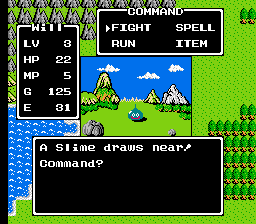
Probably the latter. It took under an hour of playing Burning Crusade, the shiny new Warcraft expansion, to remember why I quit that damn game. In a social game like that one, if you can't keep up with the people you want to play with, you're going to be very, very lonely. Logging into WoW and making a new character, I entered a ghost town... in my (albeit very short) time playing the day after the reinstall incident, I encountered one other person. I assume everyone has made the rush to Outland, but it does rather defeat the purpose of an MMO if there is nobody else to play with, doesn't it? Given the mechanics of WoW's solo gameplay, I might as well be looking at this:

On the tabletop front, my Shadowrun game continues to be a lot of fun. There is no substitute for sitting down with friends and slinging dice face to face. But even though the rules for Shadowrun are different than the D&D d20 system, they still foster the same type of gameplay, and that gameplay is based on combat.
The overwhelming majority of the rules in these games are built to support combat resolution. RP and storytelling are things that happen if you have the type of group that is interested in them, but the rules certainly do not encourage this sort of play.
Enter something like Burning Empires, and other games of its philosophy. The rules are built around character development. The rules are built around resolving storytelling conflicts. Naturally I've been devouring this rulebook (which is a hardcover beast of a book that could dent a person's skull if hurled at them from under 30 yards).
It's a completely different idea that requires a completely different type of play, however, and that's why I wonder if I'll ever actually play it. Some of the concepts are extremely difficult to wrap your head around when you've been playing the "I rolled a 17 to hit the orc" style for over a decade.
In the next post I'll get a little more into how Burning Empires works as opposed to the traditional tabletop RPG, so if you're not into that sort of thing I won't be offended if you skip over it.
NOTE: Quick shout out to defective yeti who has a terrific post about replacing old cliches with new ones via reader submissions. If you follow the link, look for "get on the nut foot", which is my small contribution.